Hurricane Ian wreaked havoc in Florida as one of the most powerful hurricanes to hit the area in decades. With mandatory evacuations ordered for residents and vacationers alike, what about the 385,000 horses that reside in the state?
Preparing equine livestock for an impending hurricane should not be taken lightly. When in doubt, haul out; if you have to stay put, there are a few key steps to include in your emergency plan and a few to avoid.
I’ve lived in Eastern North Carolina most of my life, and we’re no strangers to hurricanes, nor the flooding or tornadoes that come with them. Unfortunately, not every horse will be able to make it through these situations, but giving each one the best chance of survival is the least we can do as horse owners.
Hurricane Basics
Hurricane season runs officially from June to November, with September historically being the month with the highest hurricane activity. The impacts of hurricanes can vary depending on proximity to landfall, the direction of travel, hurricane strength, and other weather patterns occurring. Some impacts of hurricanes include:
- High winds
- Flood waters from surrounding rivers or from excessive rain
- Mudslides
- Hail
- Tornadoes before or after hurricane landfall
- Power outages
- Damage to structures resulting from winds, hail, or flooding
- Road washouts and limited emergency personnel response
Hurricanes have been around longer than humans have kept livestock, and animals have had thousands of years to hone their instincts to respond and react to all sorts of weather.
What Do I Do With My Horses?
The first thing to do is decide whether you’re transporting out or staying put. If you have a large farm, often you won’t be able to coordinate transportation for all your animals in a timely fashion. If you board, your barn owner should have an emergency plan for any major weather incidents.
Staying Put
If you have your horses on your property (or board), the first thing to check is that you have enough potable water, hay, grain, and any important routine or emergency medications for at least a week after the hurricane is supposed to impact your area.
Consult your veterinarian if you have any questions regarding any negative side effects of stopping certain medications suddenly that your horse is taking. Also, make sure your animal (and human) first aid kit is stocked up. Down fencelines and branches, and flying debris can all potentially cause injuries.
Secondly, expect fences to be down, and your horse has a way to get out of its’ pasture. Find a way to place your contact information on your horse that also won’t pose a safety hazard by getting caught in debris. A few things people have used over the years are:
- Write your phone number in Sharpie on a white hoof and seal it with clear hoof sealant.
- Braid a cattle tag with your contact information into the mane with baling twine or other durable string.
- Microchipping (though these have been known to migrate at times and be hard to locate during scanning).
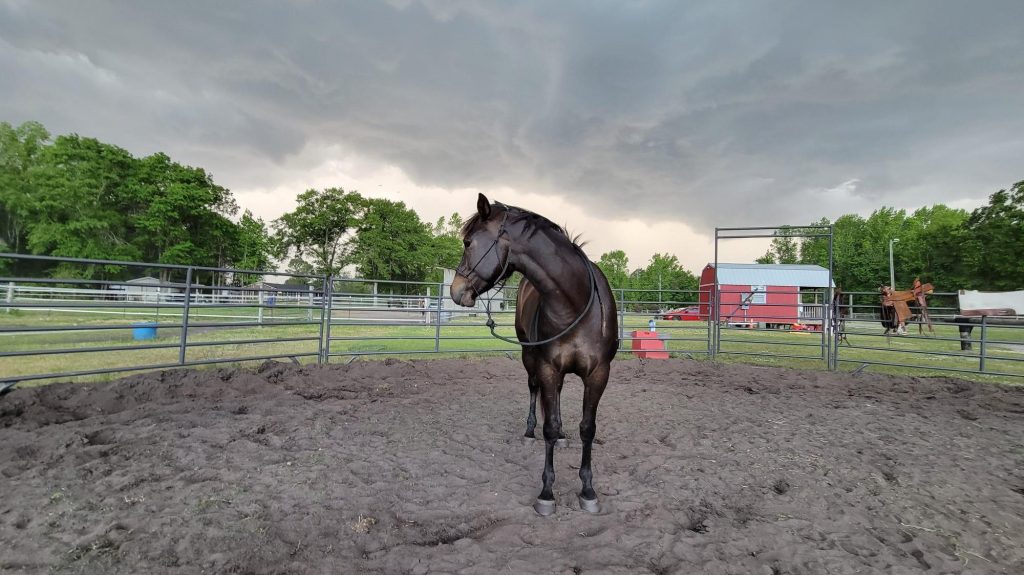
If you’re expecting high winds in your area and you do not have a barn that’s rated for hurricane-force winds, leave your horses out. If anything were to happen in a barn that can’t withstand high winds, rain, and potentially hail, your horse will be essentially trapped if things turn south.
If you have gates between pastures, leave them open. Give your horse room to run if needed or find a corner out of the wind. I’m a stickler for not leaving halters on horses because of the heightened risk of those halters becoming stuck on something and trapping your horse.
Thirdly, don’t blanket or sheet your horses. Sometimes hurricanes can happen in cooler weather than we think. If you’re in an area near bodies of water and at risk for flooding, especially if there’s been a drought period, do not put a sheet or blanket on your horse. These increase the risk of your horse drowning-much like wearing a big coat in the water impedes your swimming ability.
Hauling Out
If you’ve decided to get out of dodge, the most important thing to assess is when you decided to haul out. If you’re trying to haul out the day a hurricane is supposed to make landfall, you may be stuck on the highway in evacuation traffic or run into road closures. Give yourself enough time before the hurricane to get out safely.
Secondly, make sure your horse has a current negative Coggins. You may be able to get by without a health certificate in an emergency situation, but very few places offering shelter to those evacuating a hurricane with their horse will allow you in without a negative Coggins.
Fill up your water tanks if your trailer has them; this can also be helpful if you stay put and can be used as potable water for filling troughs and soaking feed if needed. Bring as much hay as you can and any grain or supplements (electrolytes and salt can help encourage hydration in a new place).
Stay Safe
Animals have more instincts than we may give them credit for and are a lot hardier than we sometimes think. Make the best plan you can for yourself and your four-legged friends; be prepared, diligent, and proactive. Mother nature can be unpredictable. Start preparing now for the next hurricane season, and stay safe.
 Part-Time Cowpoke