I know, I know; I had every intention of writing this sooner. But, we’re real here, and life happened that made this post have a bit of a timeline adjustment.
The Missing Link snaffle is my new favorite snaffle bit. It has incredible feel, the craftsmanship is top-notch, and that cricket is just fantastic. While it has a bit of a price tag, it’s well-worth it, and my horse is happier from it.
The delay gave my mare more time to sort out this bit a little more, so not all is lost. We’ve been hammering down on our groundwork basics the past couple of weeks as the temperature has dropped and everyone is wanting to be a little spicy.
Initial Impression
My initial impression of this bit was one of novelty at first, and I admit the cheek rings look huge out of the packaging. This bit is designed to be wide enough to accommodate a unique feature – the pre-signal portion of the bar.
When this bit sits on the bars and tongue of the horse, the bent pre-signal portions of the bit are designed to be just outside the mouth to give a little delay to the cheekpiece to reinforce what signal came from the reins.

Check out the Missing Link Snaffle and Pat and Deb’s website
This bit rigged up nicely on my headstall, and I put on a curb strap like I do with the rest of my snaffles. A curb strap on a snaffle rig is a bit different than a curb strap with a leverage bit.
A leverage bit with a curb strap is adjusted so that when the bit is engaged, the curb strap comes into contact with the bottom jaw. With a snaffle, it’s really just there so the bit doesn’t get pulled through the horse’s mouth if things get western. A curb strap on a snaffle bit shouldn’t be so loose it hangs down below the lip but not so tight it contacts the horse’s jaw.
The most touching initial impression was the handwritten note from Pat and his wife thanking me for my purchase. Such a personal note communicates they genuinely appreciate the business and developed these products because of their love for the horse, not because they wanted to make money.
The packaging is simple but secure, wrapped in brown paper and shipped in a bubble mailer, a perfect fit for my small mailbox and something that would fit in a P.O. Box if needed.
Craftsmanship
The craftsmanship on this bit is a little insane, in a good way. It’s not ornate or boasting a bunch of engraving and sparkles, but the cricket is clean and crisp, and the bars and cheek rings are of a good, solid weight. It feels like what I paid for–quality materials for a solid feel that will hold up through the years and feel good to my horse.
Before I rode my mare in it, I anticipated this would give her something solid to hold onto and communicate clearly.
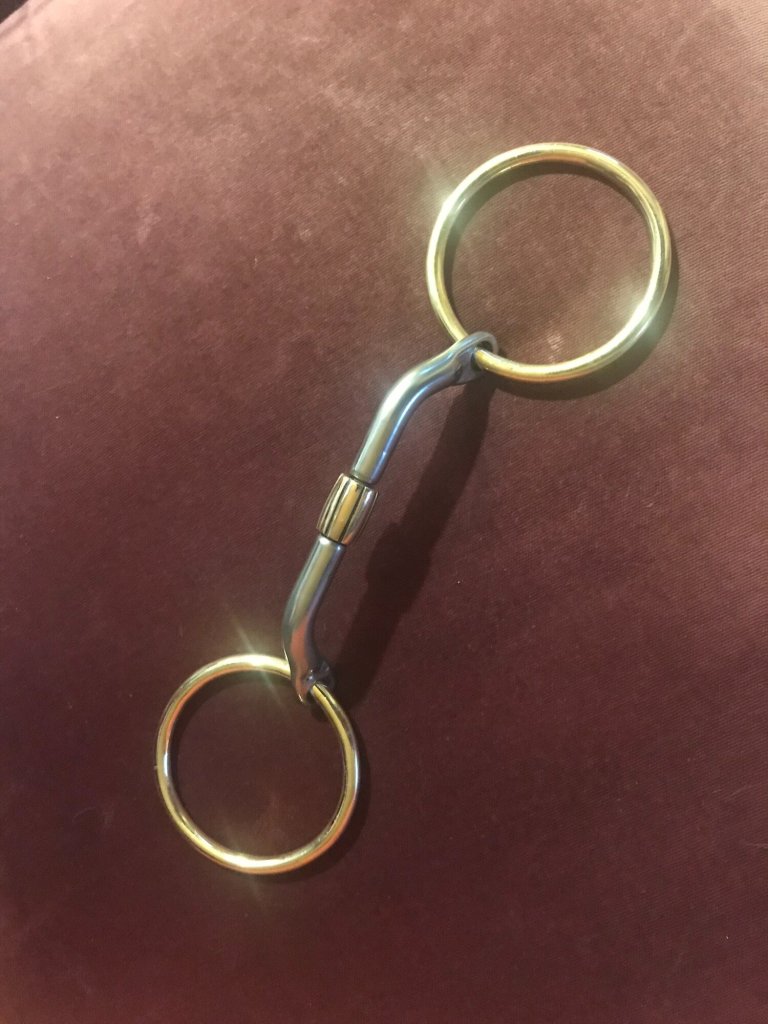
Something to remember about this bit: it’s made of sweet iron. Sweet iron is designed to rust and be “tasty” to the horse. If you’re someone who can’t stand rust on a bit, this isn’t the bit for you–you’ll drive yourself crazy to try and get sweet iron not to rust.
That being said, per Pat’s instructions, cleaning this bit consists of dunking it in a bucket after your ride and, while submerged, rolling the cricket to free any grass or hay that might have gotten caught. After that, just hang it up (this encourages it to rust a little quicker as well, helping develop that “sweetness” in the sweet iron.
Cost
Honestly, the cost was a pain point for me, but I tend to try and ball on a budget. Considering how much other bits cost that have bigger names and even bigger catalogs they’re featured in, this bit hits on the money for what you get.
At $150 a pop, this bit wasn’t cheap, but also not the most expensive out there. For context, I’ve seen some Francois Gauthier and Jeremiah Watt snaffles go for about the same price but have also seen cheaper (less than $100).
It’s hard to compare the Missing Link snaffle to other snaffles on the market because of its unique design. At first glance, it could be considered a little pricey for a snaffle, but to me, the design, craftsmanship, and support of a small business are well worth the price tag.
Rumchata’s Impression
My initial plan was to get this post up within a week, but life got in the way, and I decided my mare needed a bit more time to sort it out for me to have a comprehensive opinion of this bit.
It’s been a few weeks, and overall, I love this bit. I find she takes it more acceptingly than my previous snaffle, and the design communicates to her clearly. The fact the bar is solid means she can pick up the bit and set it in her mouth where she’s comfortable.
What’s interesting is she tended to hold this bit a little cocked in her mouth; she didn’t quite know how to find center with the pre-signal bends, but as she’s worked more in this bit, she’s found where she’s comfortable and balanced. She also tends to carry tension on the right side of her poll, which could contribute to the skewness.
From The Horse’s Mouth
When you introduce something novel to a horse, like a roller or a cricket on a new bit, it’s common courtesy to let them wear it a few times before riding in it. Allowing the horse to play with it, use the cricket, and feel all over the bit lets them work out the novelty, thus setting them up for success during your first ride in a new rig.
For Rumchata’s first time wearing this bit I rigged it up to a spare headstall I had and let her wear it over her halter. She worked that cricket until she gave my tongue a muscle cramp.
We moved on to her wearing it in the round pen working, and she engaged with it when I guessed she would as she self-soothed and worked things out in her mind.
If you think Rumchata worked at this bit, y’all should have heard my friend’s mare, Piper. She picked it up and rolled, and rolled, and rolled that cricket. For about a ten minute span this mare worked that cricket and she didn’t let up once.
It was rhythmic, not neurotic; her eye got softer and softer and her head got lower and lower to the ground as we listened to her work at that cricket. Honestly, it looked like she just ate a special brownie, if you catch my drift.
My New Snaffle Rig
The Missing Link Snaffle is the only new part of my snaffle rig. I couldn’t tell you what kind of headstall it is, though I suspect it’s Herman Oak. I don’t have fancy conchos or tooling on the leather; the braided kangaroo lace knots are from an old friend when she first started braiding.
My slobber straps are Clinton Anderson brand, a hand-me-down from another friend of mine, and the curb strap is something I had lying around for years before actually needing it. My yacht rope mecate is from Ridge Creek Tack in North Carolina, and my shoo-flies are made by a local gal here who owns HorseHairz Equestrian.

Overall, the Missing Link Snaffle bit makes a pretty good rig. The rings are bigger than what I’m used to, but I prefer a bigger ring to a smaller one–it allows a little more movement, and I need the extra room anyway for my slobber straps.
Future Adventures
I’m excited to ride more regularly with this bit. My mare and I need a refresher course in the basics going into these cooler days, and I’m sure I’ll have plenty to report back with on how this bit is holding up.
Until next time, ambulance rides are expensive, so make sure you warm your horse up thoroughly on these chilly mornings.
 Part-Time Cowpoke
One response to “Missing Link Snaffle Bit Review, Part 2”
Hay Part-timmer, would yo be so kind to give us an update, Thanks Steve
LikeLike