Those tiny, pesky bugs are back again. Here’s how to handle them.
It’s that time of year-these strange, miniscule dots start showing up on our horse’s legs, hocks, even chest and girth area. You can’t seem to brush them off, and you can’t seem to easily pick them off either. As soon as you do it seems like they just reappear the next week! I hate to break it to you, but you may have found bot fly eggs.
Does My Horse Have Bot Flies?
Without a veterinary endoscopy procedure, it’s hard to say whether your horse has an internal bot fly infestation, however, it all starts with the eggs. If you spy bot fly eggs on your horses’ coat, they’re at risk for eventually having bot flies internally.
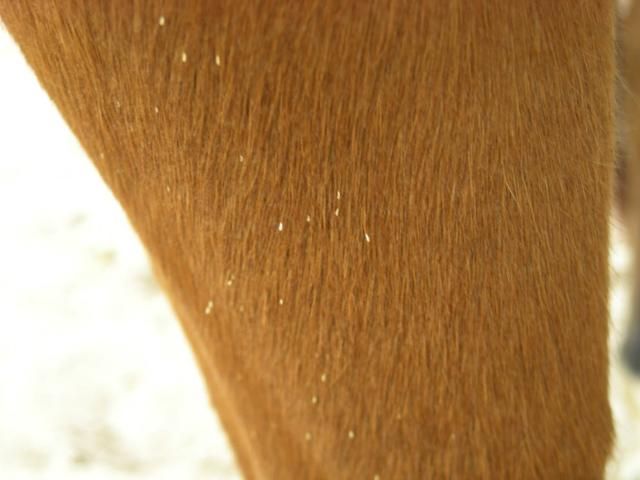
Bot fly eggs are most commonly found on the legs, girth, and hocks, though they can be lain anywhere on the horse’s coat. The eggs are smaller than a grain of rice and a yellowish color. They almost feel like grains of sand when you run your hand over them and don’t come off very easily.
Are Bots Dangerous?
Bot flies are a type of external parasite and, in severe cases, can cause GI upset, colic, anemia, impaction, or stomach perforation1. There are a few different species that inhabit various parts of the continental U.S., the most common being Gasterophilus intestinalis. Typically, an annual routine of deworming and egg scraping are all that’s needed for parasitic control on individual horses.
How Do I Get Rid Of Bots?
Step one in addressing a potential bot fly infestation in your horse is to scrape all the eggs off your horses hair. You can use a bot fly knife, a pumice stone, or any other tool that can detach these stubborn eggs from the hair.
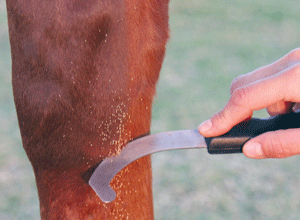
Be careful if using a bot knife, these teeth are sharp enough to scrape off these eggs, and can occasionally irritate the horse’s skin if you aren’t mindful.
Deworming For Bots
It’s recommended to use Ivermectin or Moxidectin products to deworm for bot flies, following manufacturer dosing guidelines and recommendations from your veterinarian. Deworm after the first frost, and only after all bot fly eggs have been scraped from your horse’s hair.
Here in Eastern North Carolina, we typically see bot flies in early fall up until late winter, depending on the temperatures. Frosty weather kills the adult flies, which is why it’s recommended to de-worm for bots after the first hard frost.
The Bot Fly Life Cycle
Bot flies lay eggs where they do because horses are most likely to lick these areas, allowing the life cycle to begin2. Bot flies try an lay the most eggs on the insides of knees and legs, but I’ve seen them plenty of times in the girth area, hocks, chest, neck, even rump.
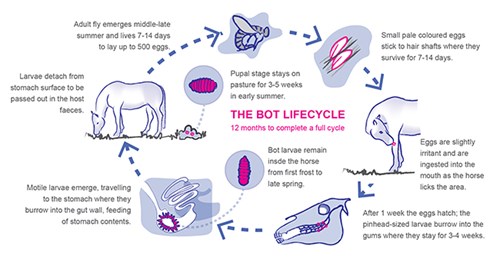
The bot fly eggs hatch in the horse’s gum line about a week after they’re licked up, eventually are swallowed, and burrow in to the gut wall. Here they’ll feed on stomach contents until late spring until they detach from the gut wall and exit the horse through its manure. The larvae then mature, erupt in late summer as mature flies, live, mate, and oviposit (lay eggs) for 7-10 days, die, and the process is repeated.
A Seasonal Routine Is All You Need
It’s not the end of the world if you spy bot fly eggs on your horse this fall. It’s part of the glamour of horse ownership, and easy enough to get ahead of. Remember to always follow your veterinarian’s advice over advice on the internet.
P.S. There’s still time to pick out your pony’s Halloween costume!
 Part-Time Cowpoke