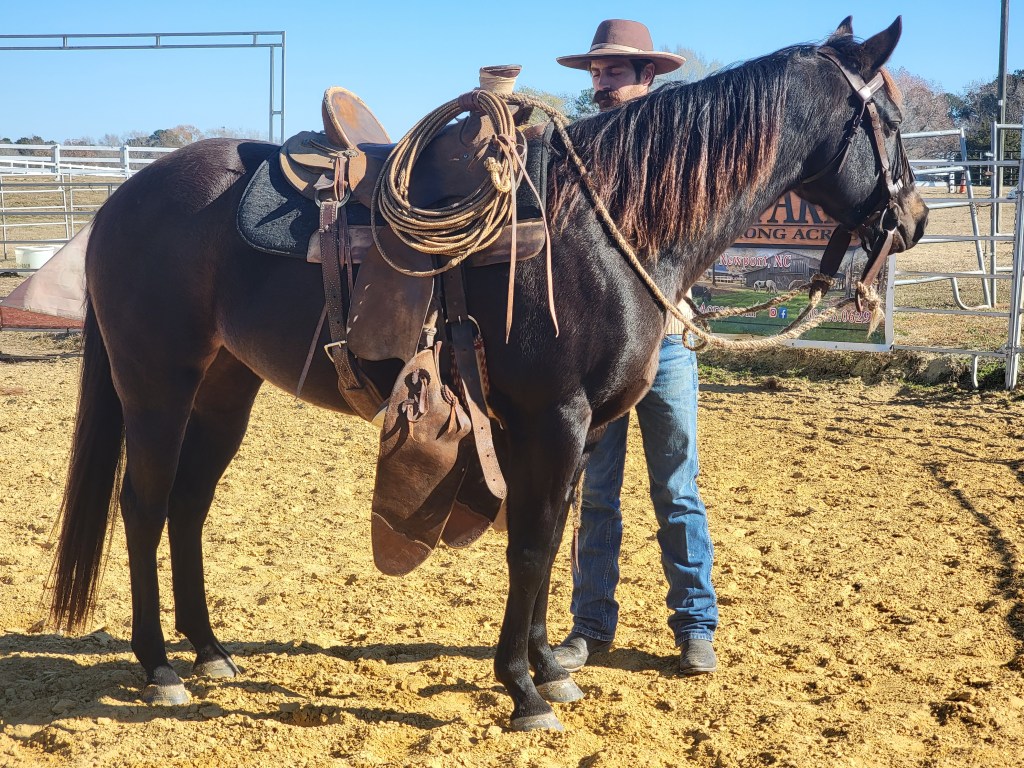
Pat Puckett’s Missing Link Snaffle has been floating around for a while now. In my first reviews, I mentioned that I love the construction, the way the hardware feels, and the way it signals the horse. My favorite feature of the snaffle is still the cricket, but now that it’s had some ride time, let’s revisit this bit and see where my mare is at that I originally bought it for.
Fair warning, this thing called life has caused some hiatuses in riding and my involvement with my mare. We’re slowly getting to a better place with that. To cut down on the reading material, we won’t get into details about that here.
However, I need to clarify that a lot of this information is graciously taken from the long, thoughtful conversations between me and Cowboy Cam. Cam has been riding my mare Chata when I couldn’t see a way around the demands of my changing work schedule or my fear after a few intense involuntary dismounts. I owe much of her continued education to him and appreciate his insight into what this bit has offered my horse and others he rides.
Overall Performance
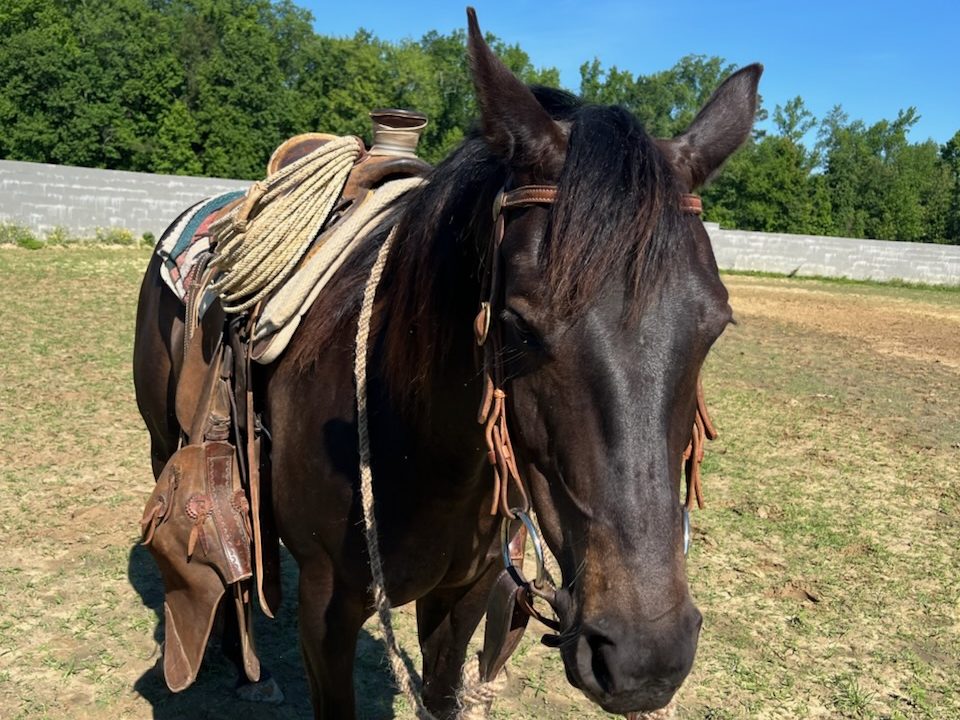
This is a Western snaffle bit with a solid bar and cricket. It has stood up to a lot of use, but not an everyday-at-the-feed-lot level of use. The construction has held true to its phenomenal quality, from the cricket to the rings. The sweet iron bar has gained its patina quickly, as it’s supposed to. The mouthpiece still communicates with the rings smoothly and rides the same with or without a bit hobble and slobber straps.
Chata’s Thoughts
I will say my mare has adjusted to using the cricket much more as time has passed, rather than just clamping down on the whole bit. She’s also had some bodywork done to help with some underlying biomechanical discomfort, which I think contributed to some of her issues.
Some days Chata “enjoys” the bit more than others, and she has made it known that she dislikes nit-picking or being too busy with your hands when she has a bit in her mouth. The problem is that sometimes she has her own opinions on the direction of travel, and you have to be a little more busy to remind her she’s not driving the train.
Signal Mechanics
Now that I’ve watched Cowboy Cam and talked with him about how the bit feels with consistent use, I have some thoughts. This bit works on a presignal and a signal (Pat outlines this in a video explanation of this bit), with the angled part of the bar serving as the opportunity for a presignal.
Despite its look, the Missing Link isn’t akin to a mullen mouth style bit nor a jointed snaffle. Its signal is more similar to that of a hackamore in that it signals the opposite side of the mouth rather than the same side.
Here’s a visual of how a hackamore rig communicates your signal to the horse:

Image Credit: Rustlin’ Rose Photography
Follow the blue arrows first. When you lift your rein, this shifts the weight of the heel knot to that same side. Then the nose buttons shift to articulate with the opposite side of the horse’s face. The red arrows outline the general path of motion of the hackamore.
When you’re riding in the missing link, you lift your rein, which articulates indirectly with the bar of the bit, allowing it to slide through the horse’s mouth (even slightly). The angled piece of the opposite side then contacts the corner of their mouth, followed by the adjacent ring as you increase rein pressure.
Personal Thoughts
As a Colt Starting Bit
As a green horse bit, or a colt starting bit, the Missing Link is a good bridge from halter to hackamore compared to a loose ring jointed snaffle. It’s a little more similar in its mechanics to a hackamore than a single-jointed snaffle, and eliminates the risk of a nutcracker effect that a single-joint holds. Granted, that effect only happens when you pull back on both reins, but sometimes situations get western and can’t be helped.
I also think the cricket benefits horses of all ages, especially young ones. Colts need an outlet for their thoughts and antsy-ness, much like toddlers, and cricket is a productive way to allow them to process their educational moments (moving the mouth facilitates nervous system regulation).
An Educational Tool
I think that this bit is a good option for horses with a harder mouth that have lost some of their feel, and those that have stopped searching for signals as eagerly. The weight and mechanics allow you to indicate and reinforce your “ask” in a way that doesn’t as easily tip over into the “too much” category, which can happen easily in a correction or jointed snaffle. By the same token, it allows you to more firmly insist on your asks in a heavier horse that may be choosing to blow through your hackamore.
I don’t want to say it’s a good tool to soften a horse, because those words aren’t entirely accurate, but it can help your horse learn to seek out softness. It is a way to communicate more succinctly that you’d like your horse to start searching for that signal again. However, this effect depends on the hands that control it, regardless.
Future Plans
Chata has been switching between the Missing Link and a soft 5/8 hackamore. I tried to fit my 5/8 hackamore from Traditional Rawhide Braiders to her the other day, since it’s an overall stiffer hackamore and she could benefit from a clearer signal, but the size doesn’t quite fit her refined features.
Right now, this bit is a tool rather than an everyday rig for Chata, and we’ll continue her education and change things as we need to. As for my new filly, I’d like to take a more traditional route of starting her in a hackamore rather than a snaffle, just as a little adventure for myself.
 Part-Time Cowpoke