Halters are a necessity when owning horses, if nothing else to use in an emergency. There’s some old superstition involved, too-I was taught you never ship a horse without a halter from your property. The question is, does the type of halter matter?
There are many styles and materials of halters. Rope halters, breakaway halters, leather halters, nylon halters–so many to choose from! While most people don’t need one of every kind, it’s helpful to know the mechanics of each to best make that decision for you and your horse.
Sometimes there are situations best for certain halters; if you ever have to ship a horse professionally, many shipping companies require breakaway or leather halters and rarely accept rope halters. Some prefer webbed nylon halters for halter-breaking weanlings, and some prefer leather. Many colt starters or people in the “natural horsemanship” world prefer rope halters.
We’ll go through all of these together so you not only feel confident in choosing the right one for you but to set both you and your horses up for success down the road.
Halter Mechanics
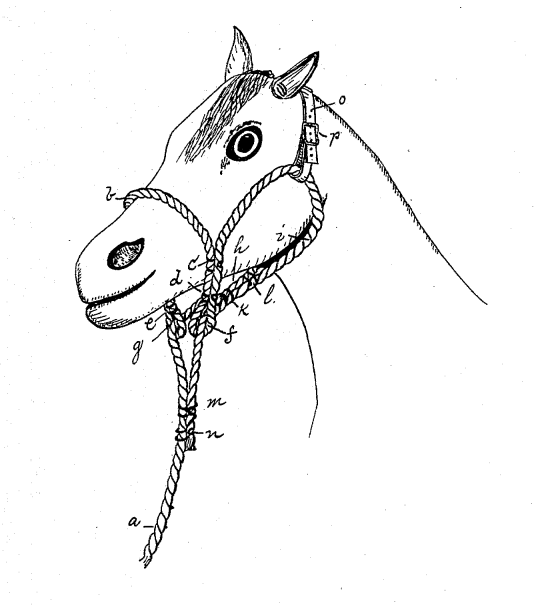
Halters are designed to direct a horse’s movement, just like a collar or harness for a dog. In fact, the term halter is Germanic in origin and means “that by which something is held.” The rope was traditionally used in some fashion in centuries past for halters, and “the halter” was actually patented in 1895 by Henry Wagner and featured a main rope body and an adjustable leather poll piece.
Basic halter construction includes material over the poll, both cheeks, under the gullet, and around the nose, all connected in some way. These can be buckles, knots, or even rivets. A lead rope is traditionally underneath the jaw, connected by a ring, loop, or snap.
Pressure is applied primarily in areas at the poll and around the nose when the lead rope is pulled. Pressure around the cheeks, nose, and poll can occur when using crossties connected at either cheekpiece of a halter. Some materials and makes create less, more, dispersed, or localized pressure.
Types of Halters
Halters vary almost from one end of the spectrum to another in terms of materials and designs. Just to name a few, you can find any number of these in a tack store or online:
- Rope halters
- Breakaway halters
- Show halters
- Arabian halters
- Grooming halters
- Biothane halters
- Webbed nylon halters
- Leather halters
- Mule tape halters
- Bronc halters
Rope Halters
This is my preferred halter. A good quality rope halter is made of good quality yacht line or some other reinforced material with high tensile strength. I prefer this halter because of its high strength, its feel, and its durability. It’s a continuous piece of rope knotted into one piece of equipment, adding to this strength.
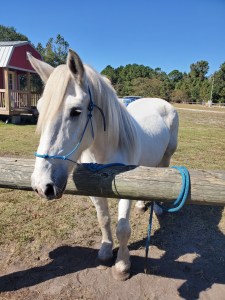
Yacht line is built to hold thousands of pounds of pressure. If a horse sits back and pulls, it can potentially put thousands of pounds of pressure onto a piece of equipment, depending on the angle of pull.
Something like a web halter that’s separated into pieces and then stitched around buckles has a lower tensile strength and is much more likely to break if a horse decides to test it, like when teaching to stand tied.
Breakaway Halters
This halter is designed to be a safe and budget-friendly version of a leather halter. A breakaway halter is often a combination of nylon webbing with a leather poll piece. The leather is designed to break if a horse pulls back with enough force, like in an emergency. Instead of having to replace the whole halter if this happens, usually, just the breakaway piece can be replaced.
The only problem with having a poll piece that breaks easily is if you have a horse that pulls often in a hissy fit, is learning to tie, or is over-reactive, this could lead to a developing a chronic pulling problem.
Breakaway halters or leather halters are often preferred to ship horses in. If a truck and trailer were to get into an accident, any horses tied in a halter that’s “unbreakable” can potentially break their neck or cause suffocation. The breakaway (or leather) halters will break before this happens. This is also why many shippers don’t allow rope halters for transport.

Nylon Halters
Webbed nylon halters can be economical and are typically what you first picture in your mind when thinking of a halter.
These halters have nylon straps with a buckled poll, typically a ring under the chin to clip a lead rope to, and either another adjustable buckle or another nylon strap around the nose.
These straps are typically double stitched and most useful if using cross ties or needing a relatively inexpensive halter.
The buckles can break if a horse sets back on it enough. A word to the wise-if the nylon itself is sunbleached or worn at all, this can cause the straps themselves to break as well.
Webbed vs. Rope Halters
Webbed halters are usually flat and distribute pressure much more easily when it presses against parts of the horse’s face. Rope halters are typically not flat and have either two or more nose-knots on the nose band to localize pressure to these specific areas.
Personally, I have had many more horses develop a pulling habit and become heavy to lead from in a webbed halter versus a rope halter because of this mechanical difference. A halter is meant to communicate our signals from the lead rope; when a webbed halter is used in training, the signal can become dampened or more generalized and therefore, easily pushed through or ignored.
A rope halter with knots communicates signals more precisely and is harder for a horse to ignore or push through–it’s less “comfortable” when things get western. This can be helpful when training young horses or retraining/tuning up older horses with poor manners.
The key here is to always release any pressure you add when your horse goes toward the “right” answer. Pretty soon, you’ll find your horse keeps lighter when leading and doing groundwork as long as you stay consistent with your signals.
Halter Safety
Halter safety is incredibly important. Many horses have suffered injuries or have died from accidents involving tying or inappropriate haltering. My top 3 personal rules for halter safety are:
- Never leave a halter on a horse in the pasture. A foot (especially a shod foot) can easily get caught in a buckle or strap. Pony pretzels need to stay off the menu.
- Never tie a horse with enough slack in their lead rope that they can get a foot over it. Again, pony pretzels are not a good thing.
- Never tie a rope halter above the halter loop. Tying above the loop creates a hard knot that will not be able to be un-tied, and you’ll have to cut your halter off. Always tie below the loop to create a breakpoint that you can work out so you can loosen it up and untie your halter no matter how western things get.
Closing Thoughts
You can find all sorts of halters online and at tack shows. Understand how each works and the pros and cons of each to decide which one is best for you and your horse. You may need only one or a couple, depending on what you want to do.
I prefer a good quality rope halter for all of my work except using cross-ties and hauling, but it’s also what I’m most familiar with. I appreciate the feel, and my horses are the most responsive, and it helps me stick with them through training “humps” without fearing equipment failure and unintentionally creating a potentially dangerous habit.
Remember to grab some mane and keep up; until next time.
 Part-Time Cowpoke